 Better chances but still not enough
With increasing demand for spices and declining profit margins for other crops, more and more smallholder farmers are turning to herbs and spices. However most of them, unfortunately, are still far away from making a decent living.
The problem
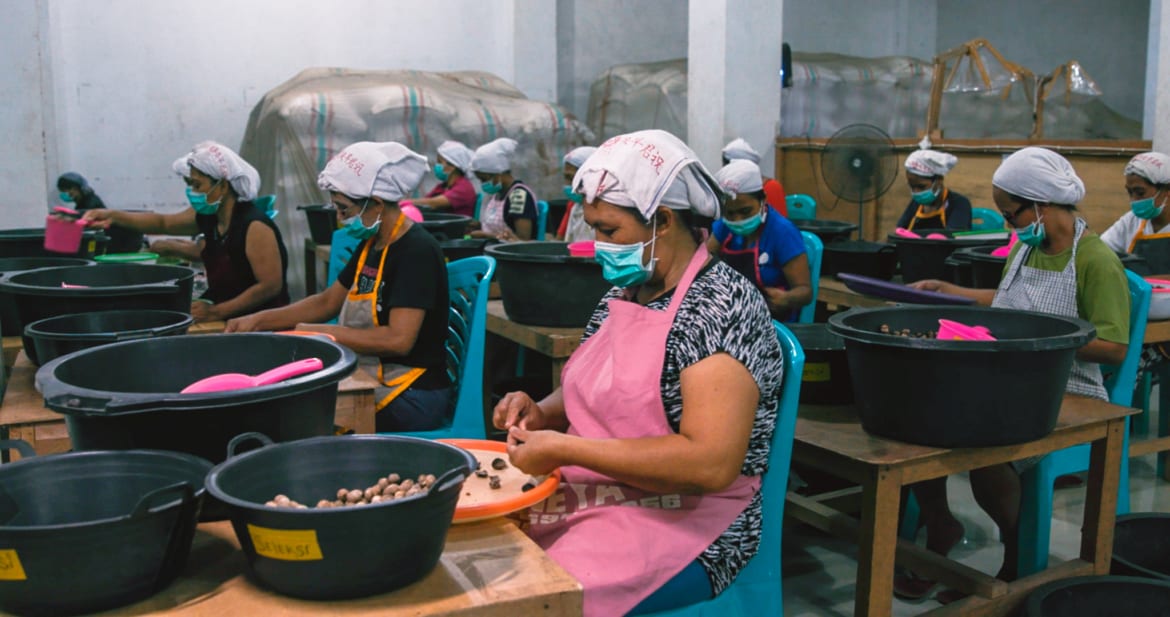
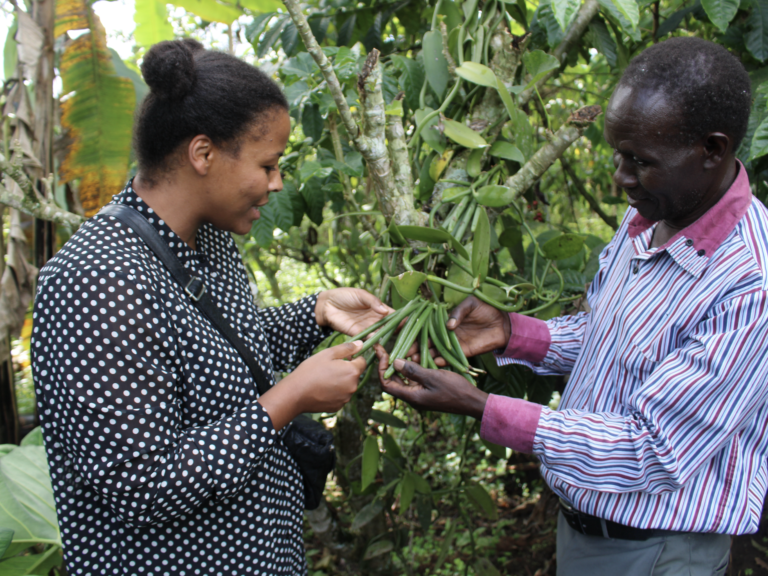
World markets for spices and herbs are expanding, with an expected rate of 7%. Spice and herbs can be a great extra source of income for smallholder farmers as they do not require large land areas for profitable cultivation, meaning growing can be achieved with minimal inputs of cash, labour and land. James Kuria from Kenya, is an example of a smallholder who followed this strategy and saw his income increase by up to 300% after switching from corn to herbs. Although examples like James’s story are surely inspiring, switching to herbs and spices alone its not a panacea when it comes to a decent livelihood for producers. Many herbs and spices are grown in remote areas with poor transportation and infrastructure. This increases production costs, while forcing farmers to be dependent on middlemen who don’t always offer them the best price, let alone a living income. In addition the sector is characterized by significant levels of uncertainty and insecurity due to unstable markets, forcing them to diversify into different products making it harder for them to stay productive.
Did you know that…
% is the rate at which the herbs and spices market is expected to grow annualy.
% of all herbs and spices are sold as loose end products
% of all spices is produced in Asia
% of all farmers growing spices represent small farms.
What we did so far
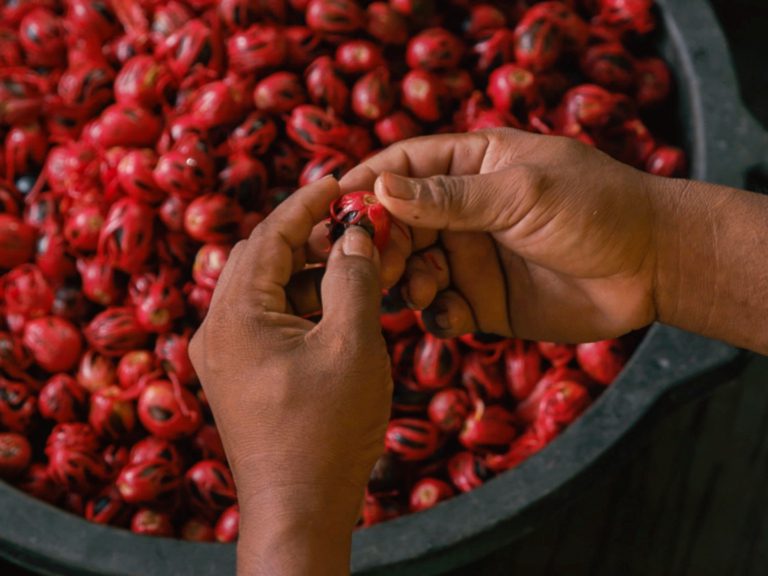
Traceable nutmeg with Verstegen
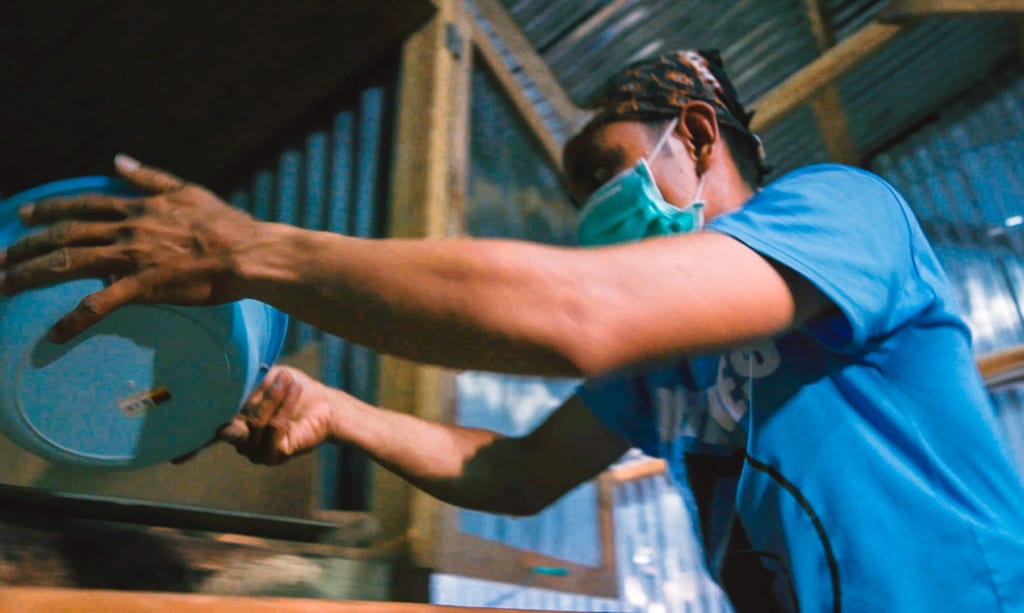
Verstegen Spices & Sauces uses our Trace platform to bring transparency to their nutmeg production chain transparent. Ultimately, the transparent chain must give farmers and consumers more involvement. The farmer strengthens his or his position by gaining new knowledge about the chain, while the consumer gains insight into price agreements and quality claims.
Read moreVerstegen: tracing nutmeg
Verstegen Spices & Sauces wanted to know: how fair is our nutmeg? Together with Fairfood, they set out to make the story of their nutmeg completely transparent. Social sustainability starts here.

What an honest and sincere outcome of the project. Very beautiful what we are doing. I hope it will get a nice follow-up.









Maybe you already have a question?
What is a living income? And what about a living wage?
Simply put: earning a living income means that someone earns enough to lead a decent life. With more diction: a living income is the compensation that a self-employed individual receives for a standard working week that enables that farmer and all his/her family to afford a decent living. This means, among other things, that the household can afford basic necessities like: sufficient food and water, a roof over their heads, education, health care, transport and education. After basic necessities, the farmer should also have enough money to save, and build a pension.
It is important though, to make a distinction between “living wages” and “living income”: a living wage applies to people with wages, whereas a living income applies to self-employed workers, such as the farmers behind our coffee. Learn more on this page.
What is traceability? And what does Fairfood want to achieve with it?
If we go by the book, traceability means that one has the ability to verify the history of something – think of: the provenance of a product. As consumers we (naturally) buy products from opaque supply chains – it is simply how the food system is largely operating at the moment. However, every product has their own individual story; we intend to tell that story. These stories extend far beyond the product that we consume. It goes all the way back to the players at the beginning of our food supply chains: the farmers and food workers.
If we can trace back the history of a product, we could identify some deep-rooted issues that the people at the beginning of the chain are facing. Issues like poverty and unfair pricing are real problems that need to be addressed. In bigger letters, we want to use traceability as a starting point to make sure that the people behind our food can earn a living income.
What is transparency? And what does Fairfood want to achieve with it?
With transparency, we deduce a food supply chain that ceases to be opaque; one in which everyone can see where their food is coming from, by who it was harvested, and whether that someone got a fair price for their produce. Then, we proceed to the following question: do those people earn enough money to make a living income or wage?
We want to use the transparency that blockchain enables to help consumers answer that question and pick their food consciously. Is your food brand claiming to be paying a fair price to their farmers? Why not check for yourself. This is what we want to achieve: a food system in which consumers can verify veracity for themselves so that it can benefit those who cannot.
Does Fairfood still organise campaigns?
Fairfood has undergone some changes: we realised that one way to make a direct change in our food system is by helping businesses to implement traceability and transparency in their supply chains. We want to drive sustainable change from the inside. The mission remains the same, however: to use our technology to the benefit of those who are at an obvious disadvantage in a long and complex supply chain. This means that campaigning is no longer our core business. Nonetheless, when needed we will not be afraid to take a stand!
What is a blockchain?
A blockchain is a distributed ledger that allows information to be captured and shared by a community. In this community, each member maintains their own copy of the information and all members must collectively validate each update. This provides a network with a single source of truth to work with. Very similar to a Google sheet, but better. Why? Because with blockchain, data can only be added according to a certain set of rules controlled by the network, and once added, the data can never be altered or deleted.
What is the added value of blockchain?
The ingredients of our food travel thousands of miles until they end up on our plate. The chains are long and complicated and therefore not always equally insightful. Blockchain technology can provide transparency and ensure that captured data can be more customized and remains in the hands of the user. This makes blockchain a fair platform where data can be exchanged, even within competitive value chains. It creates an open food supply chain, from farmer to consumer. Both farmers and consumers will have access to important information.
The farmer will have a view on further processing of his/her product, such as the quality label which is awarded at a later stage. In addition, the nutmeg farmer confirms, for example, that he has received a certain price for a certain quantity and type of quality. The consumer can see exactly where the product comes from, but also whether sustainability and quality promises are being fulfilled. The advantage is that sustainability and quality requirements on the blockchain can be guaranteed.